SPI Monitor May 2026
May 2026
Conditions throughout the eastern Caribbean were predominantly normal to below normal during the month of May. Trinidad was normal to exceptionally dry; Tobago extremely dry to normal; Grenada and St Vincent normal; Barbados, Martinique, Guadeloupe and St Maarten normal to moderately dry; Saint Lucia slightly wet to normal; Antigua severely dry; St Kitts moderately dry; Dominica, St Croix and Anguilla normal to slightly dry and St Thomas slight to moderately dry. In the Guianas, conditions were mostly exceptionally wet ranging to severely dry in northwestern areas of French Guiana. Aruba was normal. Puerto Rico was severely dry to normal south to north. The Dominican Republic was exceptionally dry to slightly wet southwest to east. Jamaica was very wet in central areas ranging to slightly dry in the west and to exceptionally dry in the east. Grand cayman was predominantly slight to moderately dry. Cuba was mostly normal ranging to moderately wet in the west and to moderately dry in the extreme east. Northern Bahamas was normal to extremely wet and Belize was severely dry in the south to mostly normal.
March to May 2026
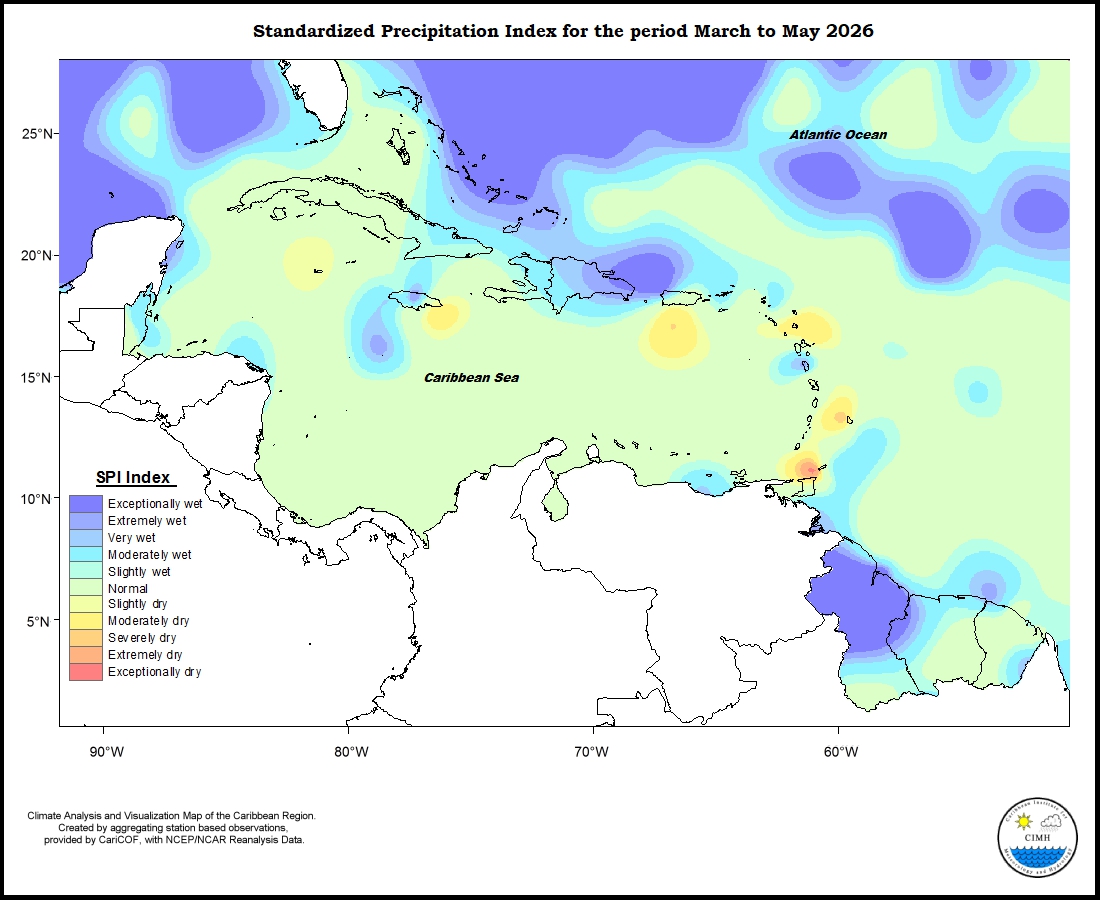
Mixed conditions prevailed over the eastern Caribbean for the three month period. Trinidad and Tobago was slightly wet to extremely dry; Grenada, St Vincent, Martinique and St Kitts slightly dry to normal; Barbados normal to moderately dry; Saint Lucia normal; Dominica slight to extremely wet; Guadeloupe moderately wet to moderately dry; Antigua moderately dry; St Maarten, St Croix and Anguilla normal to slightly wet and St Thomas moderately wet. In the Guianas conditions varied from normal to exceptionally wet. Aruba was normal. Puerto Rico was mostly normal ranging to slightly dry in the south and to exceptionally wet in the northwest. The Dominican Republic ranged from slight to exceptionally wet. Jamaica ranged from normal in southern areas to extremely wet in the north and to moderately dry in the extreme east. Grand Cayman was slightly dry. Cuba was mostly normal ranging to moderately wet in the east. Northern Bahamas ranged from normal to extremely wet and Belize was normal to moderately wet south to north.
December 2025 to May 2026
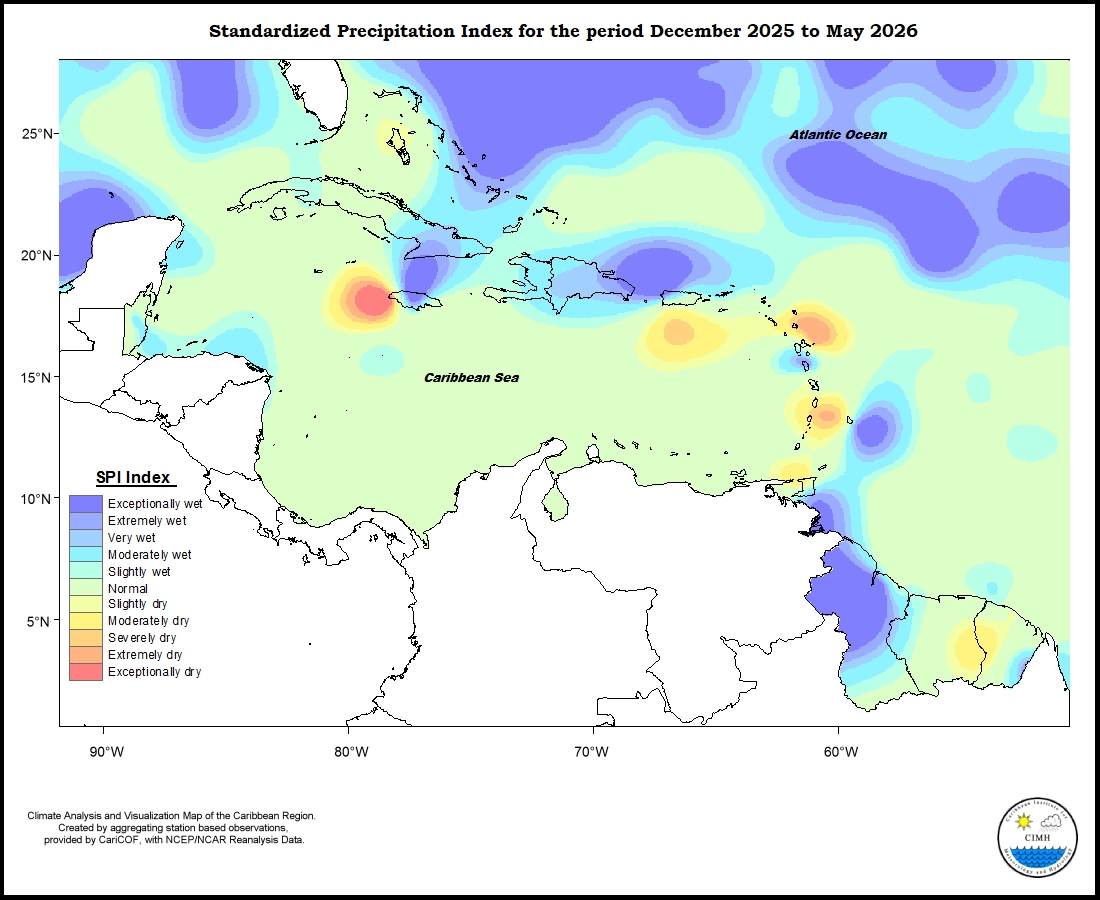
Mixed conditions prevailed throughout the islands of the eastern Caribbean over the six month period. Trinidad was extremely wet to moderately dry; Tobago, Grenada, St Croix and St Maarten normal; Barbados very wet to slightly dry; St Vincent moderate to severely dry; Saint Lucia severe to slightly dry; Martinique slightly dry in the west to predominantly normal; Dominica slight to extremely wet; Guadeloupe very wet to exceptionally dry; Antigua moderate to extremely dry; St Kitts moderate to slightly dry; Anguilla normal to slightly wet and St Thomas slight to moderately wet. In the Guianas, conditions ranged from exceptionally wet to moderately dry. Aruba was normal. Puerto Rico was slightly dry to exceptionally wet. The Dominican Republic was moderate in the southwest and northwest to exceptionally wet in the east. Jamaica was exceptionally dry in the west ranging to exceptionally wet in the north and normal in the east. Grand Cayman was normal. Cuba was normal to exceptionally wet. Northern Bahamas was slightly dry to moderately wet and Belize mostly normal to moderately wet.
June 2025 to May 2026
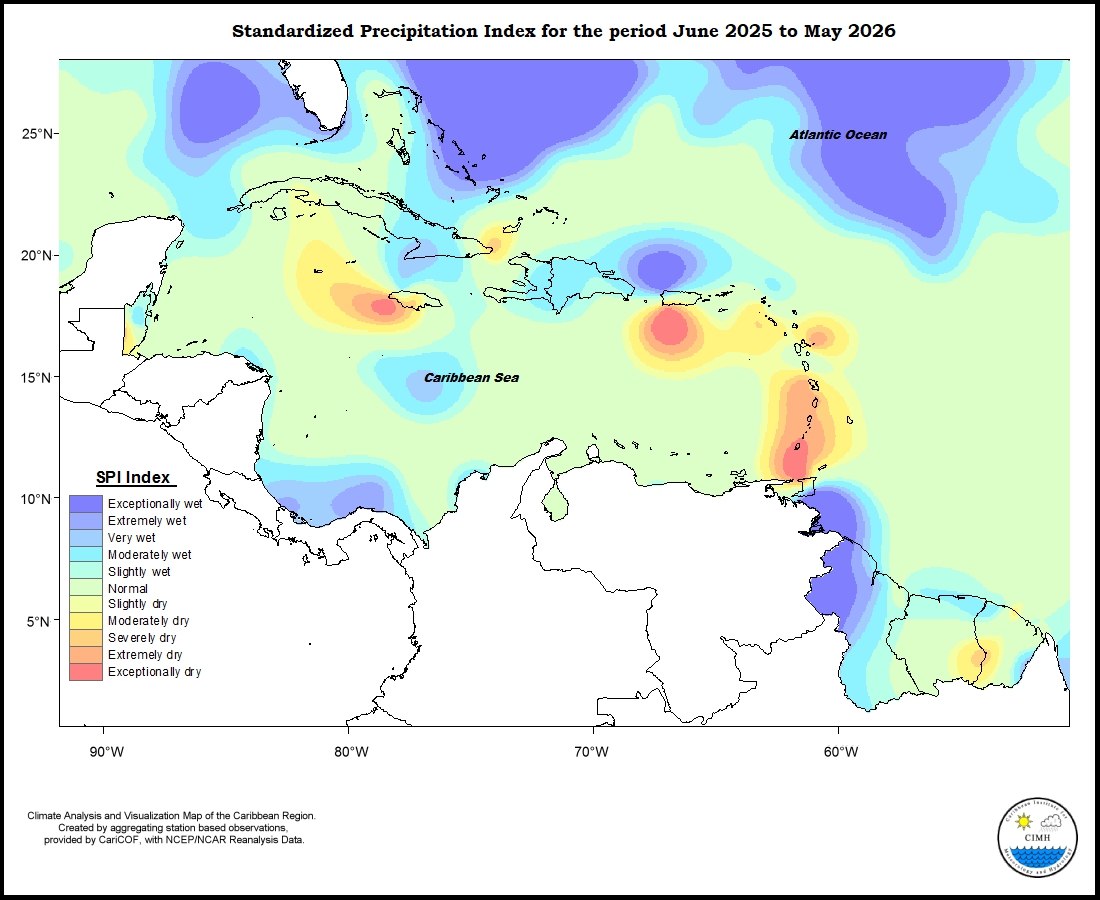
Over the twelve month period conditions throughout the eastern Caribbean were predominantly normal to below normal. Trinidad was exceptionally wet to exceptionally dry; Tobago normal to moderately dry; Grenada exceptionally dry; Barbados and Antigua moderate to slightly dry; St Vincent extremely dry; Saint Lucia extreme to severely dry; Martinique extreme to moderately dry; Dominica moderately dry to slightly wet; Guadeloupe normal to extremely dry; St Kitts moderately dry; Anguilla, St Croix and St Thomas normal and St. Maarten normal to slightly dry. Conditions in the Guianas ranged from exceptionally wet in northwest Guyana to severely dry in the vicinity of the southern Suriname/French Guiana border. Aruba was normal. Puerto Rico was extremely dry to extremely wet south to north. The Dominican Republic ranged from slight to very wet. Jamaica ranged from extremely dry in the west to moderately wet in the north and to normal in the east. Grand Cayman was moderately dry. Cuba ranged from normal in central areas to moderately wet in the extreme west, to severely dry in the extreme east and to very wet in the southeast. Northern Bahamas was normal to exceptionally wet and Belize was severely dry in western areas to moderately wet in north central areas.
June 2025 to May 2026
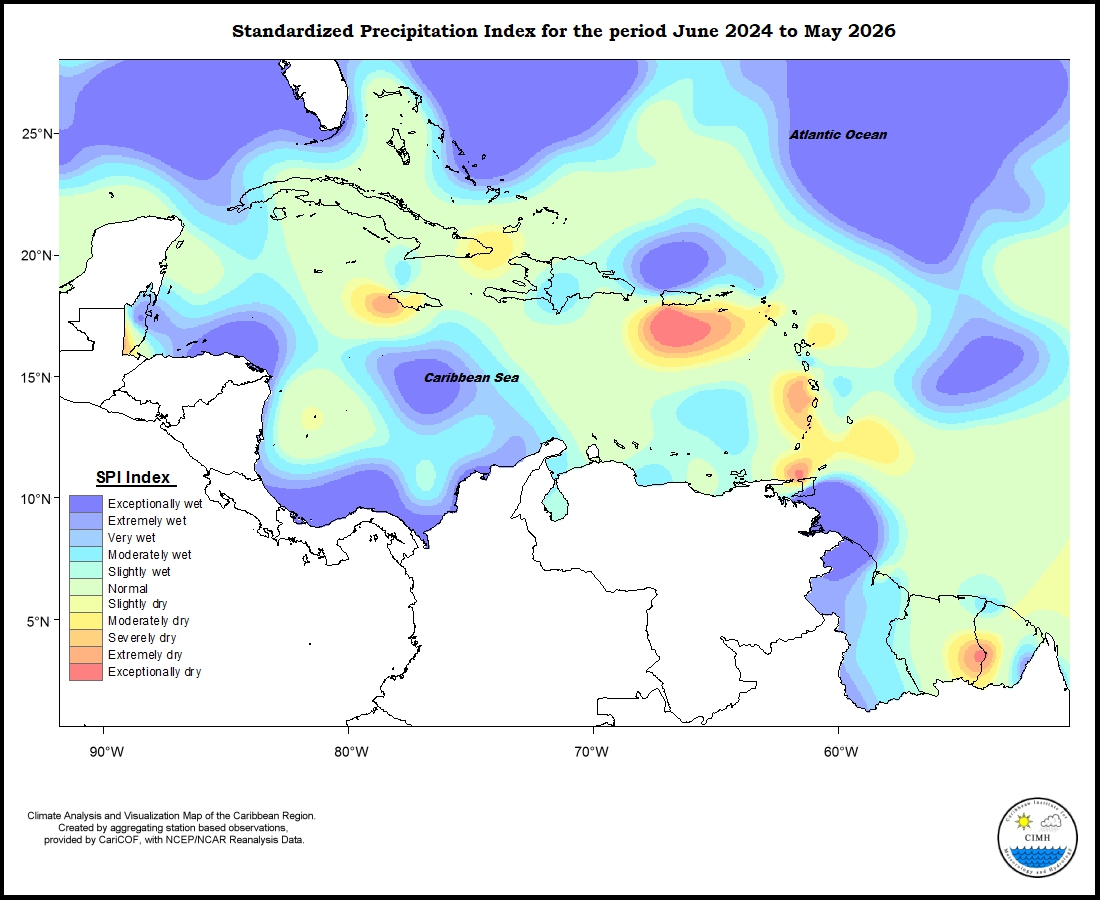
Mixed conditions were experienced over the two year period throughout the eastern Caribbean. Trinidad was exceptionally wet to exceptionally dry; Tobago and St Kitts normal to moderately dry; Grenada slightly dry; Barbados slightly dry to mostly normal; St Vincent and St Croix severe to moderately dry; Saint Lucia extremely dry to normal; Martinique severely dry to normal; Dominica slightly dry to moderately wet; Guadeloupe slightly wet to moderately dry; Antigua and St Thomas normal; St Maarten slightly dry to normal and Anguilla normal to moderately wet. In the Guianas, conditions ranged from exceptionally wet in northern Guyana to exceptionally dry in the vicinity of the central Suriname/French Guiana border. Aruba was normal. Puerto Rico was extremely dry in the south to extremely wet in the north. The Dominican Republic was normal to moderately wet. Jamaica was extremely dry in the west, ranging to slightly wet in the north and to moderately dry in central areas. Grand Cayman was normal. Cuba was very wet in the west ranging to moderately dry in the extreme east and to slightly wet in the southeast. Northern Bahamas was mostly normal to very wet and Belize extremely dry to exceptionally wet south to north.
Disclaimer
The information contained herein is provided with the understanding that The Caribbean Institute for Meteorology and Hydrology makes no warranties, either expressed or implied, concerning the accuracy, completeness, reliability, or suitability of the Outlook. The information may be used freely by the public with appropriate acknowledgement of its source, but shall not be modified in content and then presented as original material.